AI vs Fresh Developers in Pakistan: The PKR 50,000 Question
PKR 50,000 a month: a fresh developer's salary in Pakistan, or AI agents that never quit. Employers are already choosing. Developers, are you ready?
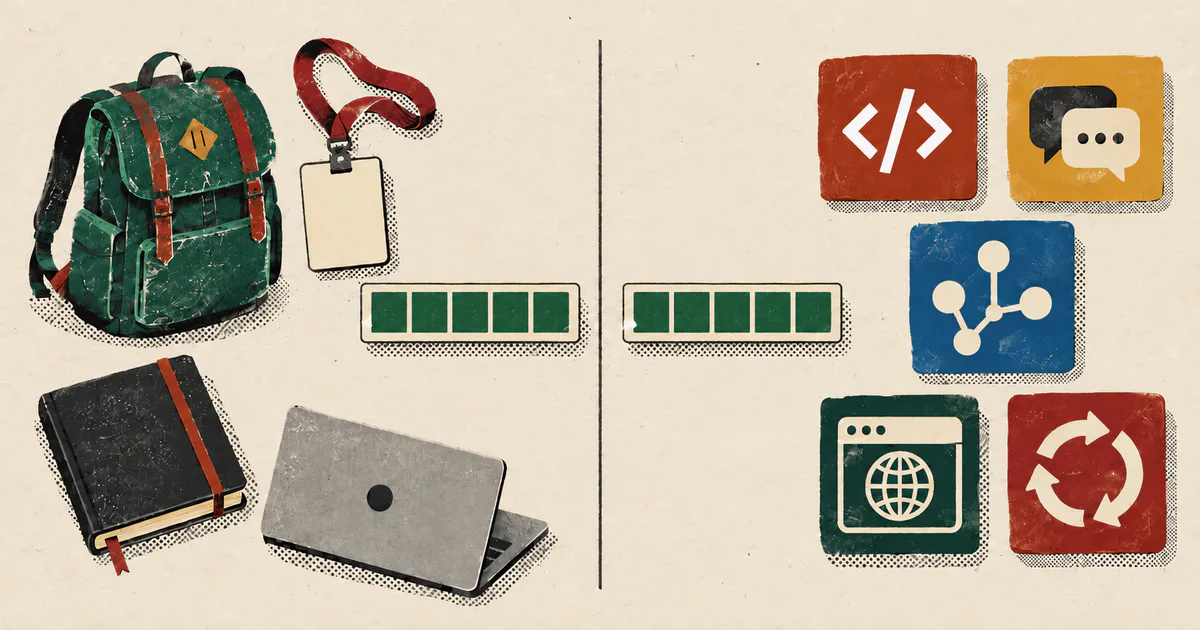
Imagine two options on a software house owner’s desk in Karachi, Lahore, or Islamabad.
Option one: hire a fresh graduate for PKR 50,000 a month. Spend two months training them on the codebase. Hope they stay long enough to repay the effort.
Option two: spend the same amount on AI tools for your senior developer. Instead of training a fresh developer, they train their own agents. The agents remember every lesson, and they don’t leave.
Both options assume you already have a senior developer. So the real question is: do you add a fresh developer to their workload, or give them an AI stack for the same monthly cost?
A few years ago, option two did not exist. Today, more and more employers in Pakistan are quietly choosing it.
Can an AI coding stack actually replace a fresh developer?
Short answer: yes, an AI coding stack can now replace much of what a fresh developer does, for the same monthly cost, and it gets better the longer you use it. But it only works under specific conditions, and it creates a long-term problem the industry has not solved.
Key takeaways
- Cost comparison: a high-usage AI stack can cost about the same as a fresh developer. See the numbers →
- Where replacement works: AI can replace a fresh developer in a defined delivery setup with a strong senior, clear rules, tests, and review. See the conditions →
- Constraints and caveats: AI provides broad execution, but human ownership, specialist depth, and the future talent pipeline still matter. See the limits →
- What fresh developers should do: compete on ownership, judgment, and depth, not syntax. See the response →
What does a fresh developer cost in Pakistan?
By “fresh developer,” I mean an intern or a developer with less than one year of experience. A reasonable monthly salary for this group is about PKR 50,000. Some small software houses pay less, and larger companies in Lahore, Karachi, and Islamabad often pay more.
Salary is not the only cost, of course. An employer also pays for a laptop, a desk with electricity and internet, software tools or licenses, and operational costs. That adds roughly PKR 15,000 to 20,000 a month in operating costs. An AI stack needs almost none of them.
What does an AI coding stack cost?
Here is one practical high-usage stack for a senior developer doing sustained delivery work:
| Tool and what it does | Per month |
|---|---|
| Claude Max (5× Pro usage): primary coding agent for long implementation sessions | $100 |
| ChatGPT Plus (includes Codex): second opinion, research, planning, and images | $20 |
| OpenRouter credits: secondary models for bulk workloads like summaries, test data, and drafts | ~$50 |
| VPS: runs agents, scheduled jobs, and other unattended work around the clock | $10 |
| Playwright, Lighthouse, GitHub Actions: browser tests, audits, and CI | Free within included limits |
| Total | ~$180 |
At the time of writing, $180 is roughly PKR 50,000, before taxes and card charges—about the monthly salary of a fresh developer. This is a high-usage, multi-tool setup designed for long coding sessions, bulk work, second opinions, and unattended jobs throughout the month.
The senior’s time is a cost in both setups: mentoring a fresh developer or briefing and reviewing AI. With AI, that review burden can fall as the repository rules, tests, and workflows mature.
Why employers are already making the switch
On an employer’s spreadsheet, an AI subscription has unusual properties. It does not ask for increments, bonuses, leave, or equipment. It works at 2 a.m. It does not lose motivation on repetitive QA. And it works across functions that normally sit in different job descriptions: backend APIs, frontend screens, test cases, deployment scripts, documentation, SEO audits, and landing-page copy. A fresh developer needs months of guidance before contributing in even two of those areas. An AI agent produces a plausible first pass in all of them on day one.
I have seen how fast this moves. I built a custom hiring dashboard in about an hour, work that would once have been a two-week task for a fresh developer.
The shift is already visible in the kinds of work fresh developers used to learn on:
Agency builds. Brochure sites, WordPress themes, and Shopify setups were the classic training ground for interns. Many agencies now hand this work to one senior developer with AI and deliver faster.
Manual QA. Writing test cases and clicking through the same flows after every release used to be an entry-level job. AI can draft automated tests, and browser automation can run the repetitive flows.
Startup MVPs. Founders who would have hired a team of three or four for a first version now ship it with one experienced developer and an AI stack. I wrote about this pattern in my Claude skill for building full-stack MVPs.
Scripts, scrapers, and data cleanup. One-off scripts, data imports, and small integrations were perfect starter tasks. They now take a senior developer minutes with an agent.
Content and SEO support. Metadata, internal-link plans, documentation, and first drafts were often given to the newest person on the team. AI handles most of the first pass.
So employers now ask a new question. Not “How many developers do I need?” but “How much can one strong developer supervise?”
The senior developer becomes a manager
The setup that works is not a non-technical founder prompting at random. It is an experienced developer managing an AI partner.
The senior developer understands requirements, architecture, security, and deployment. They know the difference between code that runs and a system that can be trusted. The AI handles much of the execution. The human reviews decisions, catches weak assumptions, and owns the result.
With enough structure, the AI partner becomes something like a delivery manager with its own interns. One sub-agent inspects the codebase, another builds the API, a third writes tests, a fourth reviews the diff for security problems, and a fifth drafts documentation. I describe my own version of this setup in what my Claude Code insights report revealed.
This is not science fiction. Agentic coding tools already split tasks, run commands, inspect browsers, review pull requests, and iterate against tests.
The senior developer’s job shifts from writing every line to creating good working conditions for the AI stack. That means a clear brief, small and well-defined tasks, repository instructions the agent reads every session, acceptance criteria, and tests that act as a gate. It also means review before anything destructive or public, and turning every piece of feedback into a reusable rule. The AI gets “promoted” when the system around it is mature enough to delegate safely.
Can AI replace a fresh developer?
Yes, under the right conditions. For a tightly scoped MVP, an internal tool, an automation project, or routine agency work, an AI stack can do most of what a fresh developer would do. A senior developer with AI can also cover early work that might otherwise need a backend developer, a frontend developer, a QA person, and a writer.
It works when three things are true. There is a strong senior developer to direct and review the work. The codebase has tests and clear rules. And the work is well defined, not open-ended research or a sensitive system like payments.
And it does not stop at first drafts. A fresh developer gets better with every month on the job. So does an AI setup, in a different way. The model itself does not learn from your sessions. The system around it does. Every corrected mistake becomes a rule in the repository instructions. Every good result becomes an example the agent reads next time. Your use cases, conventions, brand voice, and taste get written down as memory files and reusable skills. The guardrails get tighter, the tests get better, and the harness improves. After a few months, the agent gets far more right on the first try, and the senior developer spends much less time on review.
AI can replace the fresh developer’s seat in this setup, but it does not replace every capability that a growing team eventually needs. AI makes breadth cheap. It does not make accountability cheap.
A team carries independent judgment, customer empathy, specialist depth, and memory of past mistakes. People can also challenge the senior developer. An AI agent usually follows the framing it receives. If the manager misunderstands the problem, the agents help implement the misunderstanding faster.
The constraints employers should not ignore
Someone must own every system. AI does not answer the call when production fails. Keep one named human owner for everything that ships.
Review time is the real bottleneck. Generated work can be fast, convincing, and wrong. Budget senior review time, and require tests and evidence for every change. Review time falls as your rules and tests mature, but it never reaches zero. If you have seen AI-built apps fall over in production, you know the pattern. I list the warning signs in 5 signs your Lovable or Bolt app isn’t ready for real users.
Breadth is not depth. Security, payments, and performance problems still need specialists. Bring in experts for high-risk areas.
Context and data need rules. AI starts every session with partial memory, so decisions and conventions must be written down. Code, customer data, and credentials also need clear rules about which tool can see what.
No fresh developers today means no seniors tomorrow. Every senior developer was once a fresh developer. Companies that stop hiring at entry level will face an expensive senior shortage in a few years.
How to set up one senior developer with AI agents
For software houses, agencies, and founders, the safe setup has five parts:
- Pick the right person. Choose a senior developer who reviews code well, not only one who writes it fast.
- Write repository rules. Put build commands, conventions, and forbidden actions in an instructions file the agent reads every session.
- Make tests the gate. No AI change merges without passing tests and a human review of the diff.
- Start with low-risk work. Internal tools, test coverage, documentation, and prototypes come before payments or customer data.
- Turn every failure into a rule. When the agent makes a mistake, add a rule or an automated check that makes the same failure less likely to recur.
Teams that skip these steps usually end up with fast, fragile code. Cleaning that up later costs more than setting it up right. (Here is what AI codebase cleanup involves.)
What should a fresh developer do now?
The worst strategy is to compete with AI at typing syntax or assembling standard CRUD screens. Those skills still matter, but they no longer protect a career. Fresh developers need to learn to own a complete outcome.
Ship real systems, not tutorials
Put a project online. Configure the database, read the logs, add tests, and write the migration and the rollback. Explain the trade-offs in the README. Employers will value proof that you can handle the last 20 percent, where generated code meets reality.
Use AI openly, and show your judgment
A portfolio of AI-generated apps is weak if you cannot explain the architecture or debug a failure. Keep a short engineering log: what the agent proposed, what you rejected, what broke, and how you verified the fix. Learn to break work into small tasks, give agents the right context, and review their diffs. The valuable signal is not “I built this without AI.” It is “I used AI, and I still understood and owned the result.”
Go deep, and learn to communicate
Use AI for breadth, then build depth in something businesses cannot judge casually: security, data engineering, payments, infrastructure, mobile, or one industry. At the same time, practise the skills AI cannot fake for you. Clarify vague requests, find the real user, cut scope, and explain risk in plain words.
The opportunity for Pakistan
For decades, a large part of Pakistan’s software industry has run on a simple model: bill clients by the hour for each developer, pay the developer less, and keep the margin. Growth meant one thing: more people billing more hours. Fresh developers were central to it. A software house could hire them cheaply, train them for a few months, and bill them to clients as junior developers.
AI breaks the arbitrage behind that model. When an agent writes the first version of a feature in a couple of hours, the routine work a fresh developer used to fill their week with simply disappears. Clients have the same AI tools, so they will not keep paying for people to do what an agent can do. And the cost advantage fades, because an AI subscription costs the same in Karachi, Dubai, London, and San Francisco. What clients still pay for is senior judgment: the person who knows what to build, catches what the AI got wrong, and owns the result.
The companies that adapt will sell expertise, not headcount. Whether they bill by the hour, by the project, on a monthly retainer, or as a productized service, the value is the same: experienced people using AI to deliver far more in each hour. A team that delivers in one week what used to take four becomes much more valuable to its clients.
This also opens the door for smaller players. A Pakistani developer with strong communication, product judgment, and AI-assisted execution can deliver what used to need a small team. A local company can test software ideas without a large budget. As I argued in every company is a software company, the businesses that can build their own tools will win.
The advantage shifts from being cheaper to being more capable per person. That is a healthier direction, but the transition will be painful for companies, and roles, built around selling routine execution.
The new entry-level contract
AI will not remove the need for fresh developers across the industry. It will change what “entry level” means.
The old contract was simple: learn the framework, complete assigned tickets, and get faster over time. The new contract is harder: use AI to move quickly, understand what it produces, verify it, communicate clearly, and own larger outcomes sooner.
In the right setup, employers can replace an entry-level seat with a PKR 50,000 tool stack. Fresh developers, in turn, should not expect the old learning path to stay protected because it worked for the previous generation.
The strongest teams will treat AI as neither magic nor autocomplete, but as a capable junior partner that becomes more useful with training, structure, supervision, and boundaries.
And just like a human junior, the quality of its work will reveal the quality of its manager.
If you are a fresh developer, start small: ship one real project end to end, then write down every decision the AI made that you had to fix. If you run a software house, agency, or startup, the next step is below.
Kashif Aziz · Technical Consulting
Ready to set up AI-assisted delivery for your team?
I help software houses, agencies, and founders set up AI-assisted delivery: the agent workflow, repository rules, tests, and review gates that make AI output safe to ship. In a free 30-minute call, we look at how your team works today and where AI can take on real work.